


When it comes to mechanical manufacturing, automotive accessories, communication equipment housings, and industrial structural components, unstable casting quality directly causes assembly errors, short service life, frequent failures, and unnecessary maintenance costs. Many buyers only focus on unit prices when purchasing aluminum alloy die casting parts, ignoring material density, dimensional tolerance, surface flatness, and internal microstructure defects, which eventually lead to huge losses in later production and operation. Poor die castings often hide invisible quality hazards that cannot be detected by simple appearance inspection, affecting the overall stability and safety of finished equipment.
Most low-cost aluminum die castings suffer from common hidden problems including air holes, shrinkage cavities, cracks, uneven wall thickness, and insufficient surface hardness. These defects do not show obvious abnormalities in initial installation, but gradually cause deformation, leakage, fracture, and corrosion resistance degradation under long-term vibration, high temperature, and pressure changes. Ordinary suppliers rarely disclose these potential risks, leaving downstream enterprises to bear all after-sales losses and construction delays. Selecting standardized, precision-processed die castings fundamentally avoids these chronic quality troubles.
Reliable casting production strength directly determines whether customized parts can meet strict industrial standards. Changdao Precision Casting adopts fully automated die-casting molding systems, precise mold opening design, multi-stage pressure control, and integrated post-processing procedures to ensure each aluminum alloy component maintains consistent precision and stable physical performance. Strict raw material screening eliminates inferior recycled aluminum materials, guaranteeing high corrosion resistance, good thermal conductivity, lightweight structure, and high structural strength that fully matches industrial-grade application requirements.
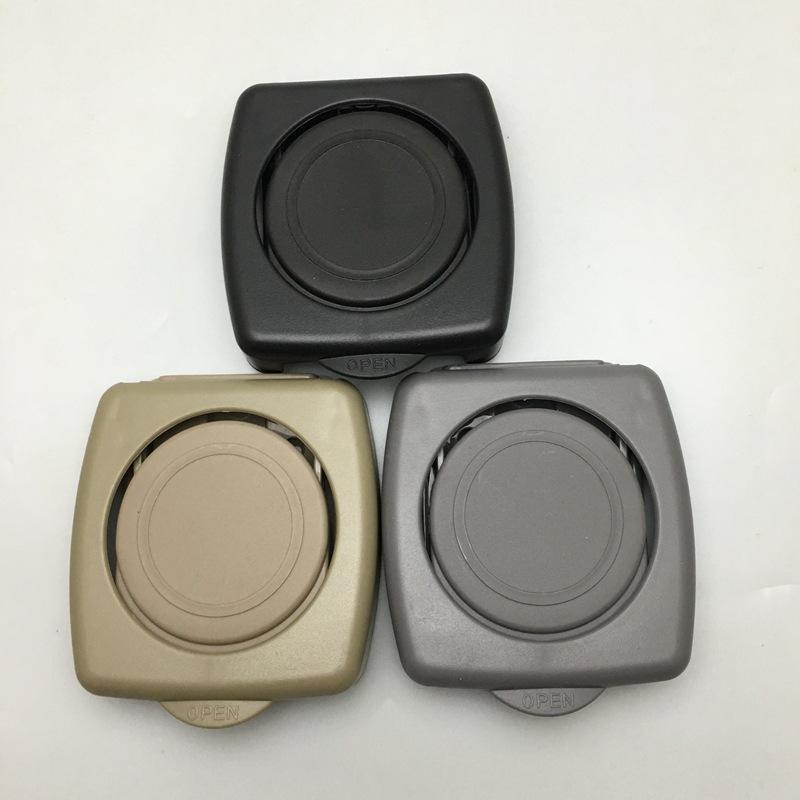
Dimensional accuracy remains the core pain point ignored by most purchasers. Non-standard tolerance control will result in tight assembly, loose fitting, repeated grinding, and prolonged production cycles. High-precision aluminum alloy die castings support micron-level dimensional control, matching automatic assembly lines, precise instrument housings, and high-precision mechanical matching scenarios. Stable size consistency greatly reduces manual trimming workload, improves overall production efficiency, and lowers comprehensive processing costs for the entire production chain.
Surface treatment quality also directly affects service life and environmental adaptability. Unqualified anodizing, spraying, passivation, and polishing processes lead to rapid oxidation, paint peeling, scratches, and rust in humid, corrosive, or outdoor harsh environments. Professional die casting manufacturers integrate standardized surface finishing processes, enhancing wear resistance, weather resistance, insulation performance, and aesthetic appearance while maintaining stable internal structure performance for long-term stable operation in complex working conditions.
Common Quality Problems & Performance Differences Of Aluminum Die Castings
| Defect Type | Negative Impact On Equipment | Low-Quality Castings | High-Precision Die Castings |
|---|---|---|---|
| Internal Air Holes | Air leakage, reduced pressure resistance, easy fracture | Serious and widespread | Almost eliminated by vacuum die casting |
| Shrinkage Porosity | Low structural strength, easy deformation under stress | Obvious wall thickness shrinkage | Uniform density, no concentrated shrinkage |
| Size Deviation | Assembly difficulty, mismatched matching parts | Large tolerance deviation | Precise tolerance within industry standard range |
| Poor Surface Flatness | Increased sealing failure risk, poor fitting effect | Rough surface, burr residues | Smooth surface, no excess burrs |
| Unstable Material Hardness | Quick wear, short service cycle | Mixed recycled materials | High-purity aluminum alloy stable hardness |
Long-term practical application experience proves that cheap aluminum die castings seem cost-effective at the beginning, but bring frequent replacement, equipment downtime, scrap parts, and delayed delivery. The comprehensive cost calculated in the whole life cycle is far higher than formal high-quality precision castings. Automotive structural parts, new energy accessories, intelligent equipment shells, and power device components all require zero-tolerance internal quality, which ordinary irregular products cannot satisfy.
Customization flexibility is another key advantage of professional precision die casting products. Enterprises can put forward requirements according to special shape, special thickness, special installation hole position, and special performance indicators. Mature mold development technology supports rapid sample making, short production cycle, and large-batch stable supply, adapting to small-batch trial production and mass mass production orders at the same time. Complex-shaped special-shaped parts can also maintain stable molding quality without deformation or damage.
In practical industrial use, aluminum alloy die castings excel at lightweight weight, excellent heat dissipation performance, good pressure resistance, and easy secondary processing. They are widely used in new energy vehicles, communication base stations, intelligent robots, household appliance shells, motor accessories, and various precision mechanical structures. Reasonable material matching and precise casting process maximize the comprehensive advantages of aluminum alloy materials and maximize the stability of finished products.
To sum up, choosing suitable aluminum alloy precision die castings is not only selecting parts, but selecting stable production technology, strict quality inspection system, and long-term reliable supply support. Avoiding superficial price comparison, attaching importance to internal material quality, dimensional precision, process technology and after-sales matching ability can help enterprises reduce unnecessary losses, improve product quality grade, and maintain long-term stable cooperative production advantages in fierce market competition.